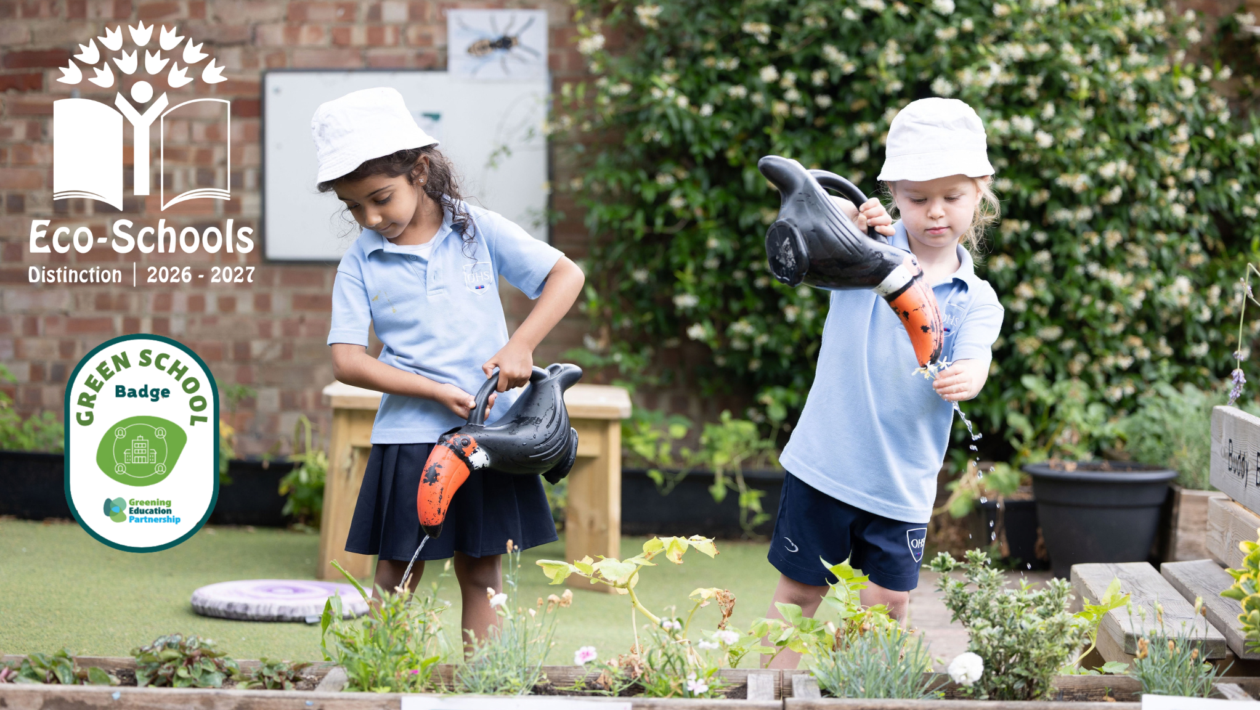
We are delighted to share that Orchard House School has once again been awarded the Eco-Schools Green Flag Award with Distinction, recognising our continued commitment to sustainability and environmental education.
For us, being an Eco-School is about much more than an award. Sustainability is woven into daily life across Orchard House, giving our pupils meaningful opportunities to understand the world around them, make thoughtful choices and take practical action.
This year, our Green Flag recognition has added significance, as the Eco-Schools Programme is officially aligned with UNESCO’s Greening Education Partnership Green School Quality Standard. By achieving our Green Flag, Orchard House is also recognised as contributing to UNESCO’s global ambition to support greener schools and education for sustainable development. The recognition also comes alongside two other existing achievements: we are a Plastic Clever School – Level 2 and hold the RHS School Gardening Award – Level 1. Together, these reflect the breadth of our approach to environmental education, from reducing waste and single-use plastic to growing food, supporting biodiversity and caring for our local environment.
Learning to make a difference
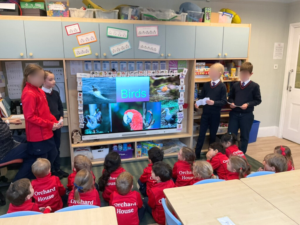 Our Eco Committee and Eco Prefects play an important role in bringing sustainability to life across the school. Led by our Head of Science & Sustainability, Mrs Nicola McWeeney, the Eco Committee helps to develop initiatives, share ideas and encourage sustainable practices throughout our community.
Our Eco Prefects also lead sustainability sessions with pupils across the school. Most recently, our Reception children learned about birds and the small things we can do to help protect their natural habitats.
In January, our Year 6 Eco Prefects and Student Council representatives from Year 1 upwards took part in a highly engaging Waste Workshop with representatives from Hubba, our waste removal service provider.
The pupils explored different types of recycling, how waste is processed and which bins should be used for different materials. They also learned about the idea of a circular economy and considered an important principle when thinking about waste: “refuse to use.”
After the presentation, pupils worked in mixed-year teams to sort a range of everyday products and decide how they should be disposed of correctly. Our Eco Prefects and Student Council representatives then took their learning back to their classes, helping to share these messages across the school.
From plate to soil to planting
Our commitment to sustainability can be seen throughout our school sites.
Every classroom has food waste bins, with scraps, tea bags and coffee granules feeding our wormeries. The worms transform this waste into nutrient-rich compost, which is then used in our school gardens.
This simple closed-loop system gives pupils a tangible way to understand sustainability: food waste becomes compost, compost enriches the soil and that soil helps us grow new plants.
Our outdoor spaces also provide opportunities to learn about and support biodiversity. Across the school, we have bat boxes, swift boxes and bug hotels, as well as planting areas and gardens that provide valuable habitats for local wildlife.
Growing, planting and learning
We were particularly pleased to receive the RHS Level 1 School Gardening Award, recognising the wonderful gardening taking place across Orchard House.
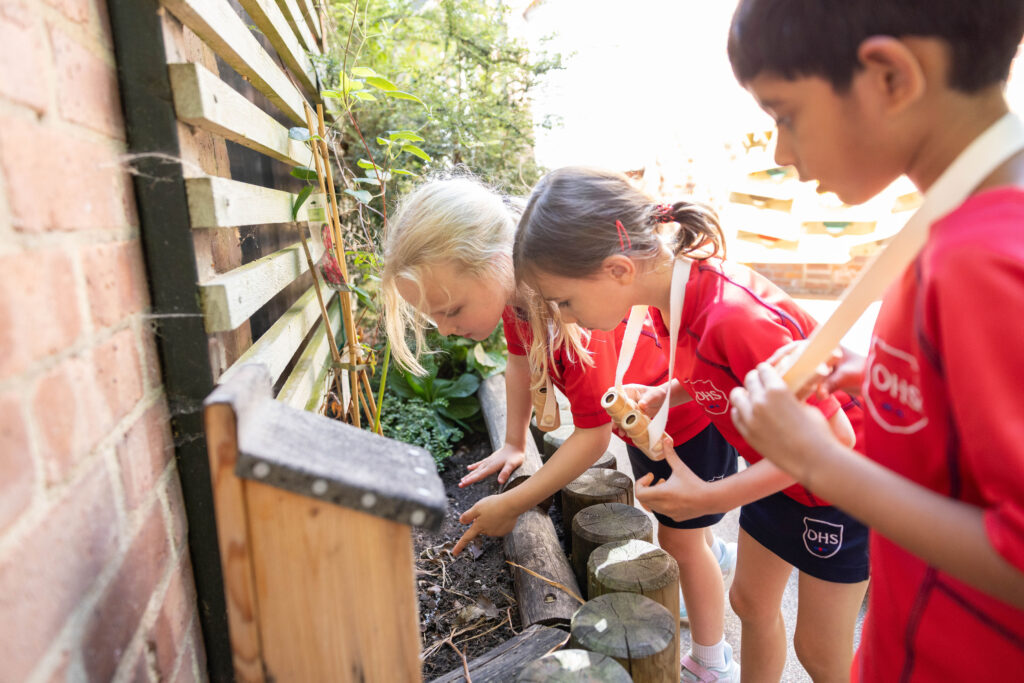
From growing potatoes in our Nursery garden to caring for our community garden and planting across our Pre-Prep and Prep sites, pupils of all ages have opportunities to get hands-on with growing.
Our community garden in Acton Park is another important part of this work. Pupils help to plant, tend and harvest vegetables, herbs and flowers, while developing a deeper connection with nature and the food we grow.
These experiences help our pupils develop curiosity, patience and responsibility, while demonstrating that sustainability can be practical, enjoyable and rewarding.
Reducing plastic and rethinking everyday choices
Our sustainability work also extends to the way we think about the products we use.
As a Plastic Clever School – Level 2, we are continuing to explore ways to reduce unnecessary plastic and encourage more sustainable choices across our community.
One particularly exciting pupil-led initiative was the launch of our first Organic Orchard Refill Shop. After weeks of planning and teamwork, our Year 5 Eco Team welcomed parents and pupils to purchase eco-friendly household essentials, including hand soap, laundry liquid, washing-up liquid, shampoo and conditioner.
Some products even sold out!
More importantly, the initiative gave pupils the opportunity to see how a simple idea can create real change. By encouraging families to bring their own containers and refill rather than buy new plastic bottles, the project helped reduce single-use plastic while also giving pupils valuable experience of running their own sustainable initiative.
Sustainability beyond the school gates
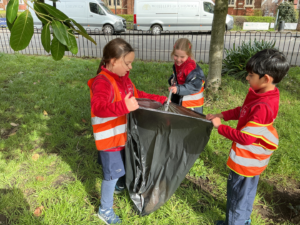 Our pupils are encouraged to think about sustainability not only within Orchard House, but in the wider community.
Regular litter picks give children the opportunity to take practical action in the local area, while initiatives such as battery recycling and Walk to School days encourage sustainable habits that can extend into family life.
Sustainability is also embedded within The Learning Orchard curriculum. In STEM, pupils explore environmental challenges through projects such as the Great Plastics Challenge, where they investigate plastic waste and develop innovative solutions, and the Solar Challenge, which introduces pupils to solar circuits and their potential to support communities around the world.
Through carefully chosen texts in English and learning across other curriculum areas, pupils are encouraged to develop environmental understanding, empathy, creativity and a sense of global responsibility.
A whole-school commitment
Our latest Green Flag recognises the collective effort behind all of this work.
Over the past year, pupils have continued to play a leading role in our environmental initiatives, supported by staff and families. Through our Eco Committee, Eco Prefects, environmental reviews and action planning, we continue to focus on areas including biodiversity, energy, waste reduction and global citizenship.
We are proud that our pupils are not simply learning about sustainability: they are actively helping to shape how we live and learn at Orchard House.
Whether it is sorting recycling, feeding a wormery, planting vegetables, refilling a bottle, protecting a bird habitat or picking up litter in our local community, these everyday actions all contribute to a bigger picture.
Our Green Flag is a wonderful recognition of that shared commitment, but our sustainability journey continues. There is always more to learn, more to improve and more that we can do together.
A huge congratulations to our Eco Committee, Eco Prefects, pupils and staff, and thank you to our families and partners for supporting our sustainability journey.
Learn Today; Sustain Tomorrow.
Join our Open Morning Friday 9 October